
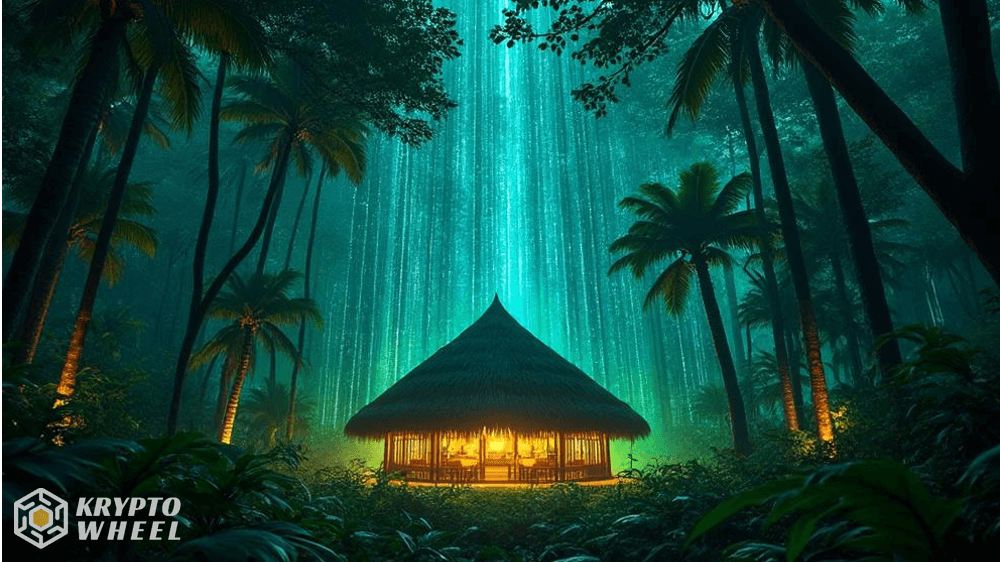

Conservation meets blockchain technology
I was reading about Paul Rosolie’s work with Junglekeepers recently, and it got me thinking about how Web3 might actually help with some of these conservation challenges. You know, the whole thing about protecting over 100,000 acres of primary forest in the western Amazon. It’s not something you hear about every day in crypto circles, but maybe it should be.
What struck me was the land ownership problem Rosolie mentioned. These landowners are apparently going to sell their forest to logging companies because, well, that’s where the money is. But what if there was another way? What if the value of keeping the forest standing could be captured somehow?
Tokenizing conservation efforts
I’ve been seeing some projects lately that are trying to tokenize conservation land. The basic idea is pretty straightforward – you create digital tokens that represent ownership or stewardship of a piece of protected forest. People buy these tokens, and the money goes toward purchasing and protecting the land from logging.
It’s not a perfect solution, I know. There are all sorts of complications with land rights, governance, and making sure the money actually goes where it’s supposed to. But the concept has potential. If you could create a transparent system where people could directly fund conservation efforts and see exactly what their contribution is protecting… well, that could change things.
Indigenous perspectives and digital systems
What’s really interesting to me is how this intersects with indigenous knowledge. Rosolie talks about these tribes seeing big trees as sacred entities. Their environmental knowledge is apparently quite advanced, developed over generations living in the rainforest.
But here’s the tricky part – any system designed to help would need to respect their autonomy. These are uncontacted tribes we’re talking about. They’ve survived by being cautious, even violent toward outsiders when necessary. Their grandparents apparently told them to shoot first when the outside world comes.
So maybe the role of Web3 here isn’t about direct interaction with these tribes. Maybe it’s about creating systems that protect their territory without requiring contact. Tokenization could fund buffer zones, support monitoring systems, or help purchase land that would otherwise be logged.
The practical challenges
Of course, there are real questions about how this would work in practice. Land ownership in the Amazon is complicated. There are overlapping claims, unclear titles, and all sorts of legal gray areas. A blockchain system would need to navigate this carefully.
And then there’s the question of governance. Who decides how the funds are used? How do you ensure transparency without compromising security for the people and ecosystems you’re trying to protect?
I don’t have all the answers. But I think the conversation is worth having. If Web3 can help protect even a small part of the Amazon, that’s something. Maybe it’s through direct land purchase, maybe it’s through funding conservation rangers, or maybe it’s through creating economic alternatives to logging.
The key, I think, is starting small. Testing approaches. Learning what works and what doesn’t. And always, always putting the protection of both the forest and its inhabitants first.
It’s not about revolutionizing conservation overnight. It’s about finding practical tools that might help address some very real problems. And if blockchain can be one of those tools, well, that’s worth exploring.