

The U.S. labor market is showing signs of resilience even as broader economic pressures build. Initial jobless claims fell last week, with the Labor Department reporting 189,000 new claims for the week ending April 25. That is a decline from the previous week. Continuing claims also dropped by 23,000 to 1.785 million, which suggests that layoffs are not picking up in a meaningful way.
Separate data from the Conference Board offered a similar picture. Fewer Americans viewed jobs as hard to get in April, while perceptions of job availability remained largely unchanged. Economists have pointed out that this data aligns with an unemployment rate that held steady during the month. So far, the labor market seems stable despite ongoing geopolitical tensions.
Inflation Pressures Complicate Fed Outlook
But not everything is rosy. The Bureau of Economic Analysis reported that the PCE price index rose 3.5% year-over-year and 0.7% month-over-month in March. Core PCE, which strips out volatile food and energy prices, increased 3.2% annually and 0.3% on the month. Both measures are now at their highest levels since late 2023. They also remain above the Federal Reserve’s 2% target.
Oil prices have added to the inflation headache. Brent crude is trading above $109 a barrel due to tensions in the Middle East. Higher energy costs have lifted prices for commodities like fertilizers and petrochemicals. Economists suggest these developments could push inflation higher in the near term. It is not a certainty, but the risk is there.
Fed Signals and Market Reactions Intensify
The Fed kept interest rates unchanged after an 8-4 split decision. That split reflects continued uncertainty within the central bank. Chairman Jerome Powell reiterated that future decisions would be data-driven. That is a careful way of saying policymakers are wary because inflation is still running hot.
Markets have adjusted their expectations accordingly. On Polymarket, traders now assign a 57% probability that there will be no rate cuts this year. Expectations for rate cuts in 2026 have also decreased dramatically. The message from the market is clear: tight monetary policy is likely to persist.
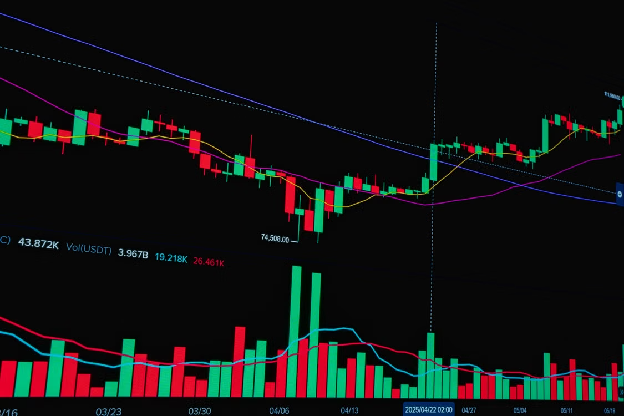
Financial markets reacted across asset classes. Treasury yields climbed, with the 30-year yield reaching 5%. That is a key level that tends to affect risk assets. Bitcoin moved lower, approaching $76,000 as tighter monetary expectations weighed on sentiment. Market commentator Holger Zschaeptiz summed up the mood with a simple “Ouch” in response to the yield spike. I think that captures how many crypto experts feel. They view rising yields as a barrier to Bitcoin’s performance.
Related: Bitcoin funding rates have stayed negative for 47 days as market pressure builds. That is an unusually long stretch and suggests that leveraged bulls are not confident about a near-term rally.