
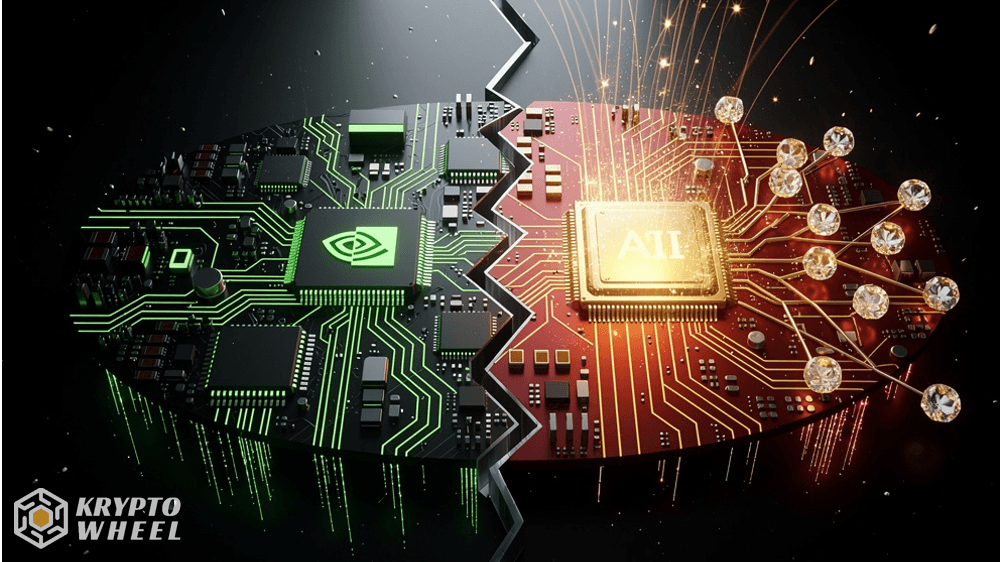

Nvidia once held about 95 percent of China’s AI chip market. Now, it effectively holds zero. That might sound like an exaggeration, but it’s not. It’s the result of US export controls that have locked the chipmaker out of the world’s second-largest economy.
CEO Jensen Huang has acknowledged the situation openly. He said Nvidia has lost its entire AI accelerator business in China. The big winner here is Huawei. The Chinese tech giant is quickly becoming the main supplier of advanced AI hardware for domestic companies.
How US export controls erased Nvidia’s China business
The trouble began in October 2022. The US Commerce Department introduced strict rules on advanced semiconductor sales to China. Those rules blocked Nvidia from selling its top chips, the A100 and H100 GPUs, to Chinese buyers.
Nvidia tried to work around the restrictions. It designed special versions of its chips that met the new performance limits. But then Washington tightened the rules again in October 2023. Those workarounds were no longer allowed.
It wasn’t just the US government pushing Nvidia out. Chinese authorities also told major tech companies to stop buying Nvidia’s AI chips entirely. So both governments were squeezing the company from opposite directions at the same time.
Huawei steps into the vacuum
With Nvidia out of the picture, Huawei has stepped in. The company has strong support from the Chinese government and a growing domestic chip ecosystem. Major tech firms like Baidu, Alibaba, and Tencent are now using Huawei’s Ascend series processors for AI training and tasks.
The policy paradox nobody wants to talk about
The US export controls were meant to slow China’s AI progress by limiting access to advanced chips. But some analysts are questioning whether that plan worked. By cutting Nvidia off from China, the US may have done something no Chinese policy could have: it created a huge captive market for domestic chip companies, worth billions of dollars a year, with no foreign competition.
Before the bans, Chinese companies had little reason to switch from Nvidia. The CUDA software ecosystem was strong, the hardware was top-notch, and switching costs were high. The export controls removed all those barriers practically overnight. Companies that would have stayed with Nvidia for years were forced to build up Huawei’s ecosystem instead.