
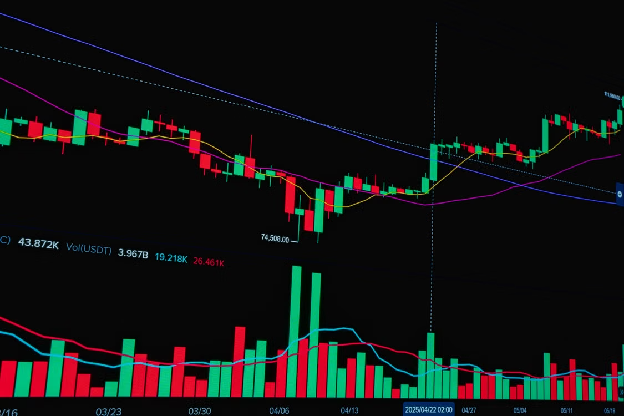

All options trading strategies revolve around buying and selling multiple option contracts simultaneously to build an optimized position. And traders love them because they offer a cost-effective way to hedge risk while still leaving room to profit from price speculation and future market movements. Like insurance, with a premium you can digest.
Crypto options are should ideally be popular than futures, given their massive leverage, limited loss (if you’re going long), and non-linear nature – payoff depends not just on the underlying asset’s price, but on time to expiration, implied volatility, and how the current price sits relative to the strike.
There’s been rising institutional interest already – though not the dominant preferred choice of traders yet, options have become one of the fastest-growing derivatives products in crypto, and retail traders are increasingly drawn to options trading strategies that have a proven track record in conventional markets.
In this post, I’ll walk you through two of the most widely used options trading strategies, long straddle and the iron condor, and a few tips to help you out.
Key Takeaways
- A long straddle buys a call and a put at the same strike and expiry, profiting from big moves in either direction.
- An iron condor combines a call and put credit spread, profiting when price stays within a set range.
- Straddles suffer from time decay in flat markets; iron condors suffer if volatility spikes past the protected range.
- Choosing between these options trading strategies comes down to a view on volatility, not direction.
What is a Long Straddle and How Does it Work?
A long straddle is used when a trader expects a major price move but doesn’t know its direction – say, ahead of a major announcement – where the asset could rally hugely or crash badly. It involves buying a call and a put on the same asset, with the same strike price and expiry, so the trader isn’t picking a side, only betting on movement itself.
Let’s say Bitcoin is at $35,300, and a trader buys both a call and a put at that strike, each costing $4,000 – $8,000 total. Price must move far enough to cover both premiums to break even:
- Upside break-even = $35,300 + $8,000 = $43,300
- Downside break-even = $35,300 – $8,000 = $27,300
If BTC rises to $46,000, the call nets roughly $2,700 after costs; if it falls to $24,000, the put nets around $3,300. But if price hovers between the two break-evens – say $37,300 – the trader loses money, since the gain on one leg doesn’t cover the combined premium paid.
Benefits and Risks of a Long Straddle
- Profit potential is theoretically unlimited, since there’s no ceiling on price.
- Loss is capped only because an asset can’t fall below zero.
- The trade-off is time decay – if price stays flat, both options lose value daily.
- Straddles work best right before high-impact events and struggle in sideways markets.
What is an Iron Condor and How Does it Work?
Where a long straddle profits from movement, an iron condor profits from its absence in range-bound markets. It combines four option legs – a call credit spread and a put credit spread on the same expiry – selling options closer to the current price to collect premium, and buying further-out options on each side to cap risk.
If, for example, Bitcoin trades at $100, and a range of $95-$105 is expected. A trader could sell a $105 call and buy a $110 call (net credit $0.5), then sell a $95 put and buy a $90 put (net credit $0.5) – a total credit of $1 upfront.
If BTC stays within $95-$105 at expiry, every option expires worthless and the trader keeps the full $1.
If price breaks past $110 or under $90, losses are capped by the protective options bought further out.
Advantages and Disadvantages of an Iron Condor
- High probability of profit in stable, range-bound markets.
- Clearly defined, capped risk on both sides.
- Profit is capped at the credit collected upfront.
- Margin requirements run higher since options are being sold.
- The multi-leg structure makes it more complex than many other options trading strategies.
Long Straddle vs. Iron Condor: When to Use Which
Here’s how I typically rationalize for choosing either of the options trading strategies:
- Long straddles profit from volatility; iron condors profit from its absence.
- Straddles cost more upfront but need less precision about where price lands, as long as it moves enough.
- Iron condors cost less – or generate income outright – but require price to stay put.
- Neither is inherently better; they’re built for opposite conditions, which is why traders often keep both in their toolkit.
Crypto trading platforms such as Delta Exchange India, which offer tools for building and adjusting multi-leg options positions, can make executing either strategy smoother in fast-moving crypto markets.
The Bottomline
The long straddle and the iron condor are basically two ways of trading volatility rather than direction.
Understanding that distinction makes the mechanics less intimidating and turns them into tools to reach for depending on market conditions. Like any options trading strategies, both carry real risk and are best approached with smaller positions until the dynamics feel familiar.
FAQs
When is a long straddle the best strategy to use?
Around major volatility events like macro news or big crypto catalysts – the kind of moves traders track closely on cryptocurrency trading apps like Delta Exchange India. It performs poorly in flat, low-volatility markets due to time decay.
Is a long straddle bullish or bearish?
Neither, it’s delta-neutral at entry and profits from the size of a move, not its direction.
Long straddle vs. long strangle – which is better?
A straddle costs more (at-the-money options) but needs a smaller move to break even; a strangle is cheaper but needs a bigger move.
Are long straddles reliably profitable?
Not automatically, they work best entered during low implied volatility ahead of an event, since IV crush afterward is the main risk.
How is maximum profit calculated in an Iron Condor?
It equals the net premium collected upfront, kept in full if price expires between the two short strikes.