
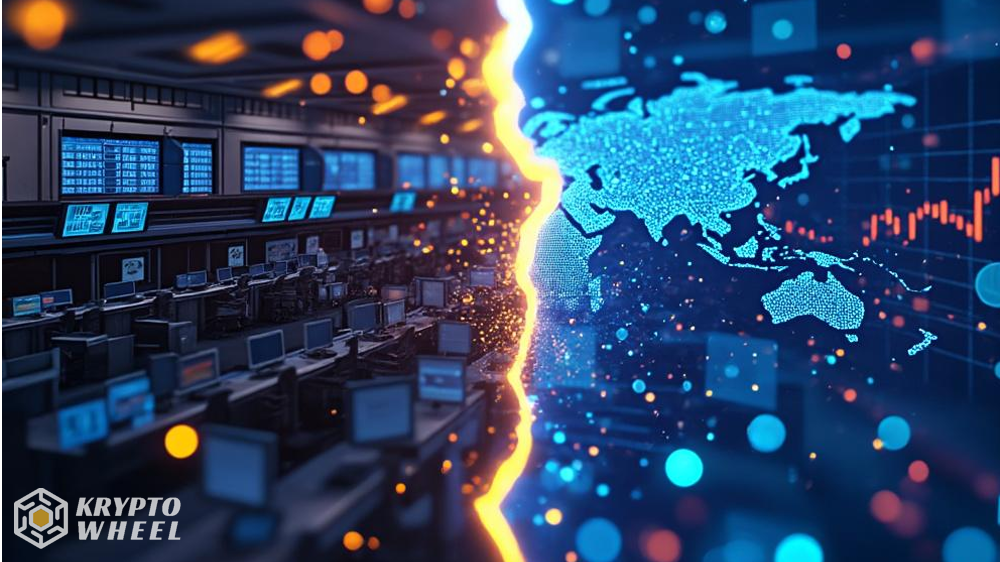

The Weekend Trading Gap Problem
As more traditional stocks move onto blockchain networks, we’re seeing an interesting timing problem emerge. Traditional financial markets operate on a Monday through Friday schedule with specific trading hours, while cryptocurrency markets never close. This creates what some experts call a “weekend gap” risk.
Marcin Kaźmierczak from RedStone explained the issue pretty clearly. Imagine something significant happens to a company over the weekend—maybe a factory fire or major announcement. In traditional finance, the stock market would be closed, and the price would adjust when markets reopen on Monday. But with tokenized stocks trading on decentralized exchanges, people could still be buying and selling that stock throughout the weekend, completely unaware of the real-world developments.
Ghost Prices and Arbitrage Risks
The core issue lies with how oracles work. These are the systems that bring external data onto blockchains. Most major oracle providers freeze equity price feeds when U.S. markets close on Friday afternoon, and they don’t resume updating until Monday morning. During that window, on-chain versions of stocks like Tesla could keep trading at what Kaźmierczak calls “ghost prices”—prices that don’t reflect reality.
This creates two major problems. First, it opens up massive arbitrage opportunities for traders who can spot the price differences. Second, and perhaps more concerning, it could leave lending protocols dangerously under-collateralized if the value of their collateral suddenly drops over the weekend without the on-chain price reflecting that change.
The Shift to Complex Products
What makes this particularly tricky is that the market is moving beyond simple stablecoins into more complex tokenized products. We’re starting to see portfolios that mix treasury bills, private credit, commercial paper, and equities—essentially creating on-chain hedge funds. If oracles can’t keep up with real-time pricing during market closures, these complex structures could be fundamentally mispriced.
Kaźmierczak mentioned that RedStone advocates for different oracle approaches, including what they call a “Pull” model where data gets delivered on-chain only when users actually need it. This ensures the data is always current. But he admitted that most protocols still use the older “Push” model because it’s easier to integrate, even if it means dealing with stale data during market closures.
Looking Ahead
As real-world asset tokenization continues to grow, this weekend gap issue will become more pressing. The industry’s goal is to make these tokenized stocks permissionless and available in DeFi protocols for 24/7 trading. But until oracle systems and protocols evolve to handle the timing mismatches between traditional and crypto markets, there’s an inherent risk that needs addressing.
Kaźmierczak put it simply: “We still need to see how they behave on the weekend.” It’s one of those problems that seems obvious in hindsight but could catch people by surprise if not properly addressed as more traditional assets move on-chain.