
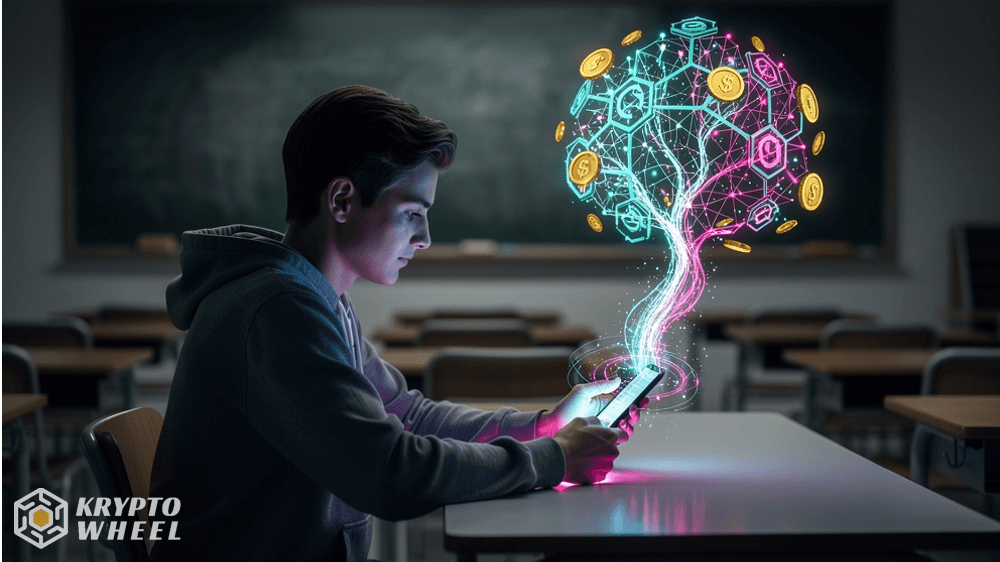

Students want crypto classes, but many are still learning from social media. That is one takeaway from a new survey commissioned by crypto exchange OKX.
The survey found broad support for teaching crypto and blockchain in college. Among 500 US college students, 90% said schools should offer these subjects. Among 500 parents, 87% agreed. About 27% of students and 32% of parents went further and said such instruction should be mandatory.
Support is stronger than supply. A separate 2025 review of 533 US universities with accredited business schools found that only about 28% offered blockchain courses. So the demand for formal education appears to outpace what campuses currently provide.
Social media leads the way
When students were asked about their most important source of crypto information, 33% named social media or influencers. That is nearly five times the share who cited schools, teachers, or professors. Parents were different. Their leading source was crypto platforms and apps, at 21%.
That pattern probably makes sense. Social media is easy to reach, and many young people already spend hours there. But it is not the same as structured learning. Some content is helpful, some is promotional, and some is just wrong. The gap leaves students to sort through mixed signals on their own.
One important caveat
The survey was run through Pollfish, an online survey platform that reaches users of third-party mobile apps. OKX said respondents were not recruited from its customer base. But the exchange did not disclose the survey’s weighting, margin of error, or how many respondents owned crypto.
That last point matters. If a large share of those surveyed already held crypto, the support numbers might look different from the general student population. Even so, the overall result is worth noting. Students and parents see value in crypto education, and universities are only partly meeting that need.
Formal courses won’t solve everything. But they could give students a more reliable base than random social media clips. The survey suggests universities have room to catch up.